
Best Blinds for Sliding Glass Doors: A Florida Homeowner's Guide


For most Florida homes, the best blinds for a sliding glass door are vertical blinds, solar roller shades, dual shades, or interior shutters in a bypass configuration. The right pick depends on how much sun the door lets in, how often the family uses it, and whether the room needs blackout coverage or just glare control.
Central Florida sliders work harder than sliders almost anywhere else in the country.
A west-facing slider in Ocoee or Winter Garden can hit 120 degrees on the glass by 4pm in July.
UV bakes furniture, fabrics, and floors. Humidity warps cheap plastic. Pets and kids drag cords across the track. Whatever covers that door needs to handle real Florida conditions, not just look good in a showroom.
This guide walks through five treatments worth considering for a sliding glass door, what each one does well, where it falls short, and which choices work best for Orlando-area homes.
There's a quick comparison table up top, deeper breakdowns of each option, a Florida-specific buying section near the end, and a short FAQ.
Quick comparison: Best blinds for sliding glass door treatments
Treatment | Best for | UV / heat control | Operation | Florida lifespan | Price range |
Wide spans, daily traffic | Moderate | Wand or cord | 8 to 12 years | $ | |
Roller shades (solar) | Heat and UV control, lanais | Excellent | Roll up or down | 10 to 15 years | $$ |
Wide or tall sliders | Excellent | Remote or app | 10 to 15 years | $$$ | |
Light filtering + blackout | Good | Roll | 10 to 12 years | $$$ | |
Interior shutters (bypass) | Permanence, resale value | Good | Tilt panels | 20+ years | $$$$ |
Vertical blinds

Vertical blinds are still the most-installed treatment on sliding doors in Florida, and there's a reason for that.
They handle wide spans (some sliders run 8 to 12 feet across), they stack out of the way when the door is in use, and they're forgiving when a labrador or a five-year-old runs through them.
The catch is the slat material. Cheap PVC vertical slats warp in Florida heat, especially on west-facing doors. After two summers, the bottoms curl outward and the panel never sits flat again. Fabric verticals or rigid PVC in a heavier gauge hold their shape much longer. If you're replacing builder-grade verticals that came with the house, the slat upgrade is the change that matters most.
VU's vertical blind line traces back to the company's roots as Verticals Unlimited, the original Ocoee shop founded in 1984.
Good fit for: family rooms, dining areas, any door that gets daily use.
Skip if: you want a clean modern look with no visible mechanism.
Solar roller shades
A single roller shade can cover a slider as wide as 12 feet on one bracket, which gives you the simplest, cleanest profile of any option here. The choice that matters is the fabric.
Solar screen fabric is the move for Florida sliders. It's an open-weave material that blocks UV (90% to 99% depending on openness factor) while letting you see through to the lanai or the yard. You keep the view, you cut the heat, and you stop the fading. Openness factors of 3% to 5% are the sweet spot for west-facing Central Florida doors. Anything more open lets too much heat through. Anything tighter, and you lose the view.
Blackout roller shades are the other option, useful for bedrooms with a slider out to a patio. Just know that a true blackout shade on a slider needs side channels to seal the edges, or light leaks around the sides at sunrise.
Browse VU's roller shade options for fabric, opacity, and color choices.
Good fit for: lanais, master bedrooms with patio access, any room where keeping the view matters.
Skip if: you have a very wide slider and don't want a single oversized roll visible at the top of the door.
Motorized roller shades
Manual rollers work fine on most sliders, but motorization earns its keep in three specific scenarios: doors taller than 8 feet where the pull is awkward, second-story sliders that are hard to reach, and west or south exposures where you'd want the shade to automate by time of day.
Motorized roller shades can be set to drop at 2pm to block peak afternoon sun, then raise at sunset so you can see the lanai. That kind of programmed cycle is what actually saves AC dollars on a Florida slider, since most homeowners don't manually adjust shades through the day.
Motorization adds roughly 30% to 50% to the cost of a comparable manual roller. Battery-powered options install without hardwiring, which matters in retrofits.
Good fit for: tall sliders, second-story doors, smart home setups, west-facing exposures.
Skip if: the slider is short, easy to reach, and you don't mind manual operation.
Dual shades
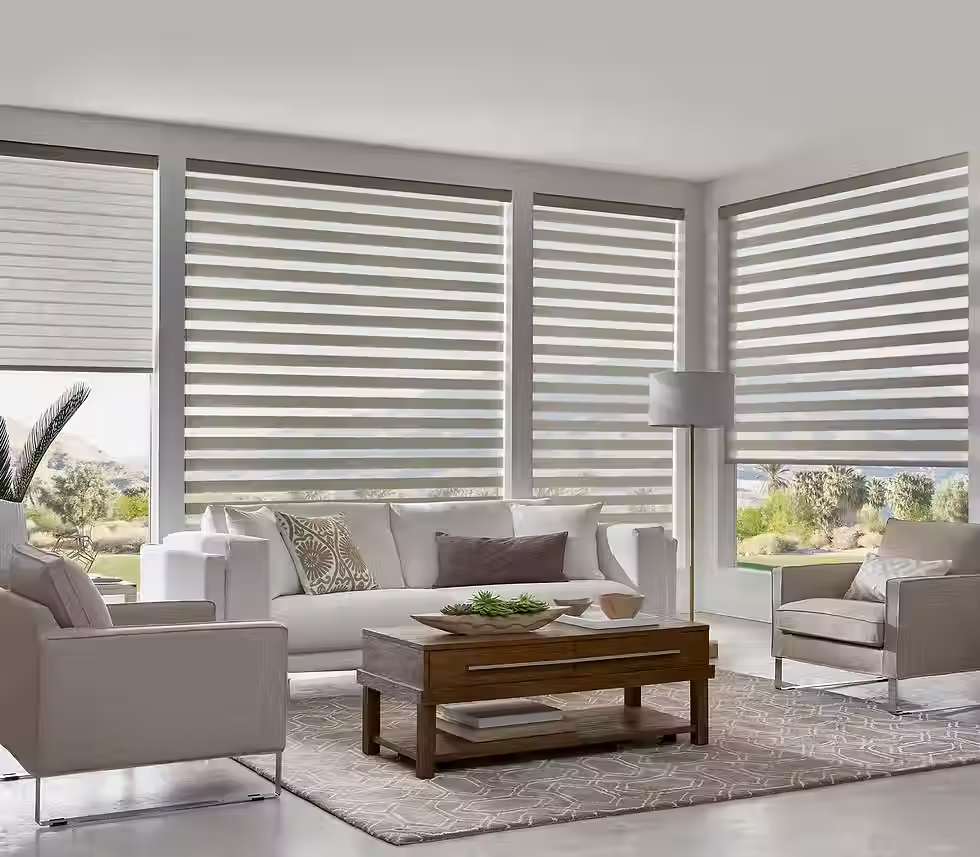
Dual shades layer two fabrics on a single roller mechanism, usually a sheer or solar fabric paired with a room-darkening or blackout fabric. You alternate between them by rolling the shade up or down to bring whichever layer you want into the window opening.
On a sliding door, this gives you genuine flexibility: solar fabric for daytime glare control while preserving the view, blackout fabric at night for full privacy. It's the closest you can get to two treatments in one budget.
VU offers dual shades sized for sliding door applications. The mechanism stays compact, and fabric pairings can be matched to the room.
Good fit for: living rooms with mixed daytime and evening use, master bedrooms, family rooms where one shade has to do everything.
Skip if: budget is the main constraint. A solar roller alone costs less and covers most daytime needs.
Interior shutters (bypass or bifold configuration)
Interior shutters on a sliding glass door come in a bypass or bifold track configuration that lets the shutter panels move out of the way when you open the door. They're the most permanent option here, they add resale value, and they handle Florida humidity well when specced in faux wood or composite. Real wood swells and warps, so it's not the right pick for a slider exposed to outdoor air through frequent opening.
The downside is cost and access.
Shutters on a slider are the most expensive treatment in this list, often by a wide margin. And every time you walk outside, you're folding panels out of the way, which gets old if the door is your everyday route to the lanai.
Good fit for: formal rooms, sliders you rarely open, homes where resale value matters.
Skip if: the slider is your main door to the pool or yard.
What to consider before you buy: Florida-specific factors
The treatment matters, but so do the conditions. A few things to think through for any Orlando-area sliding door:
Sun exposure direction. West and south-facing sliders take the worst heat and UV in Central Florida. These doors deserve solar fabric, full stop. East-facing gets harsh morning sun but only for a few hours. North-facing sliders are the easy ones. Energy-efficient window treatments make a measurable difference on west-facing rooms running AC all summer.
HOA color rules. Some Orlando communities (Windermere, Dr. Phillips, Reunion, Celebration, parts of Horizon West) require white or off-white treatments showing to the exterior. Most treatments come with white-backed options specifically for this reason. If you're in an HOA neighborhood, check the architectural guidelines before you order.
Lanai integration.
If your slider opens to a screened lanai, the treatment options expand. Indoor solar rollers handle the door itself, while outdoor motorized shades or Sunbrella fabric panels on the lanai itself can keep the whole outdoor room usable through summer afternoons.

Cord-free for kids and pets. Corded blinds are still legal under federal safety standards, but they aren't recommended for homes with children under eight or with cats. Every treatment in this guide is available cordless or motorized.
Humidity.
Faux wood and composite shutters hold up well in conditioned air. Real wood doesn't. Fabric-based options (dual shades, rollers) are fine indoors but should not be installed on the lanai itself where they're exposed to outdoor humidity. That's where Sunbrella-rated outdoor fabrics earn their place.
How to choose: quick decision guide
Cheapest functional option that lasts: rigid PVC or fabric vertical blinds.
Heat and UV are the main problem: solar roller shades, 3% to 5% openness factor.
Tall, hard-to-reach, or smart-home slider: motorized roller shades.
One shade that does day and night: dual shades with solar + blackout pairing.
Permanence and resale value: faux wood interior shutters in a bypass configuration.
The right treatment for your sliding door
Every Florida home is a different combination of sun exposure, family routine, style preference, and budget.
The wrong treatment on a slider is expensive twice: once when you buy it, and again when you replace it three years later because it didn't hold up to Central Florida conditions.
VU Window Treatments has installed sliding door treatments across Greater Orlando and the Space Coast since 1984, with over 350 installs completed in the last 12 months alone. Every project starts in our 16,000 square foot Ocoee facility and ends with a free in-home consultation. We measure your door, check the sun exposure, and walk through the American-made options that fit your home, your daily use, and your budget. No pressure, no obligation.
Schedule your free in-home consultation and find the right treatment for your sliding glass door in under an hour.
Frequently asked questions
What is the best window covering for sliding glass doors in Florida?
For most Florida homes, solar roller shades and vertical blinds are the best all-around choices. Solar rollers handle heat and UV while keeping the view. Verticals handle wide spans and heavy daily traffic on a smaller budget. Interior shutters give the most permanent, highest-end finish for sliders that rarely open.
Are vertical blinds outdated?
The look has evolved. Fabric verticals and heavier-gauge rigid PVC have largely replaced the shiny plastic verticals of the 1990s, but the vertical-stacking format is still the most practical option for wide sliding doors. Not outdated, just updated.
Can you put blinds on a sliding glass door?
Yes. Vertical blinds, roller shades (including dual shades), and interior shutters all come in configurations built for sliding doors. The key is choosing a treatment with a stack, roll-up, or bypass function that doesn't block the door's opening path.
How much do blinds for a sliding glass door cost in Orlando?
For a standard 6-foot slider, expect roughly $250 to $500 for quality vertical blinds, $600 to $1,200 for solar roller shades, $900 to $1,800 for motorized rollers or dual shades, and $1,800 to $3,500 or more for bypass interior shutters. Final pricing depends on width, fabric, motorization, and configuration.
Do I need motorized blinds on my slider?
You don't need them, but they make sense on wide or tall sliders, on second-story doors that are hard to reach, and on south or west exposures where time-of-day automation pays off in AC savings.


Comments