

Also called zebra or banded shades
Dual Shades With VU Window Treatments in Central Florida
Alternating sheer and solid bands that slide past each other, so one shade covers both filtered daylight and a clear view.

How they actually work
One Shade, Two Positions
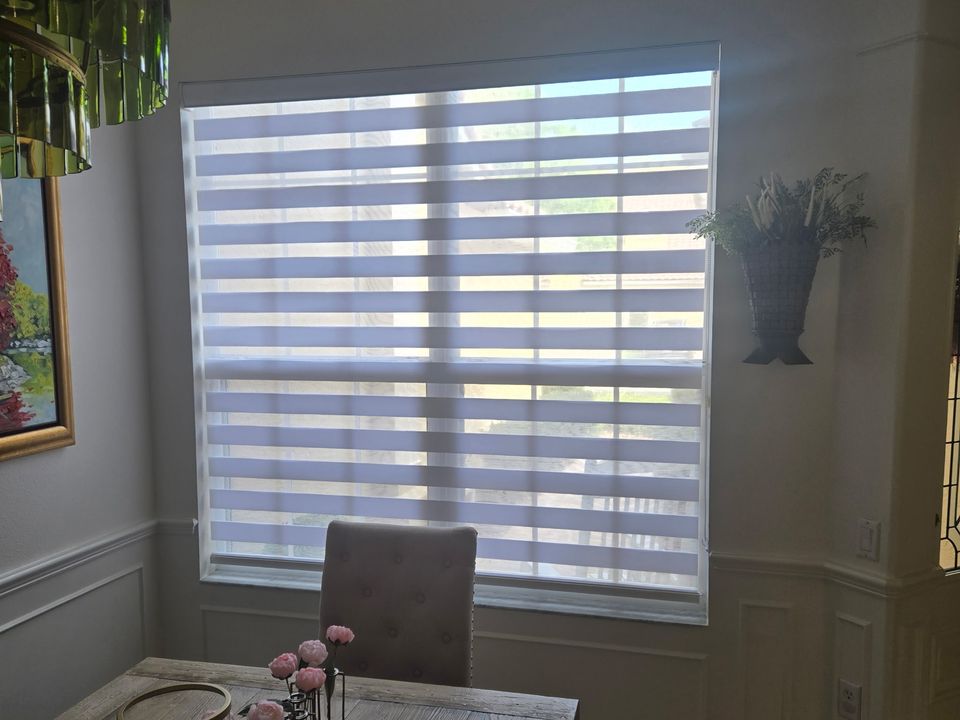
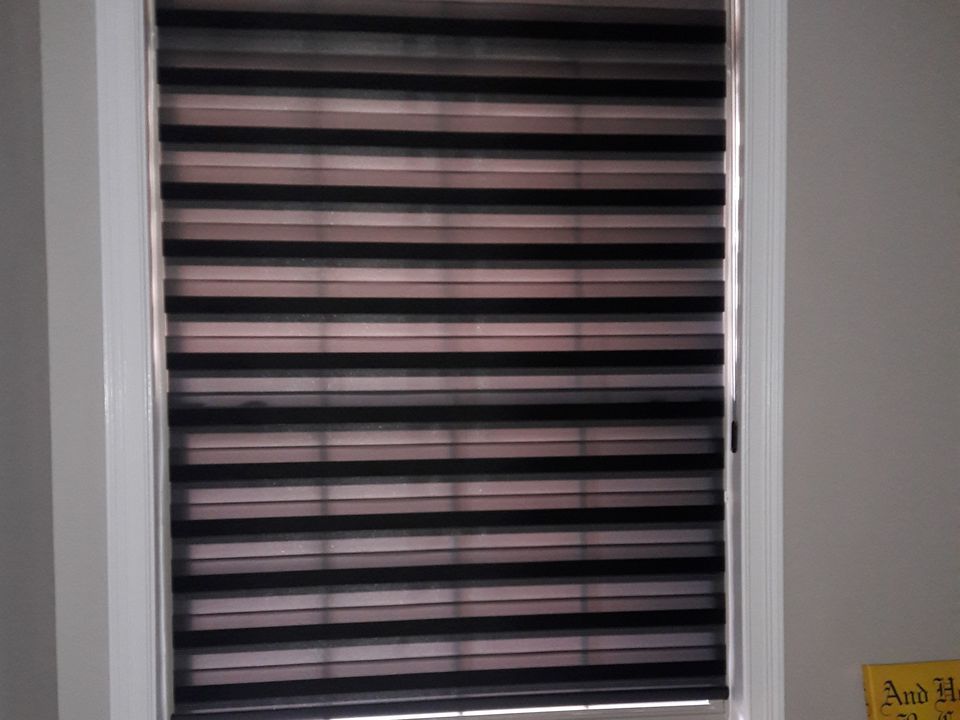
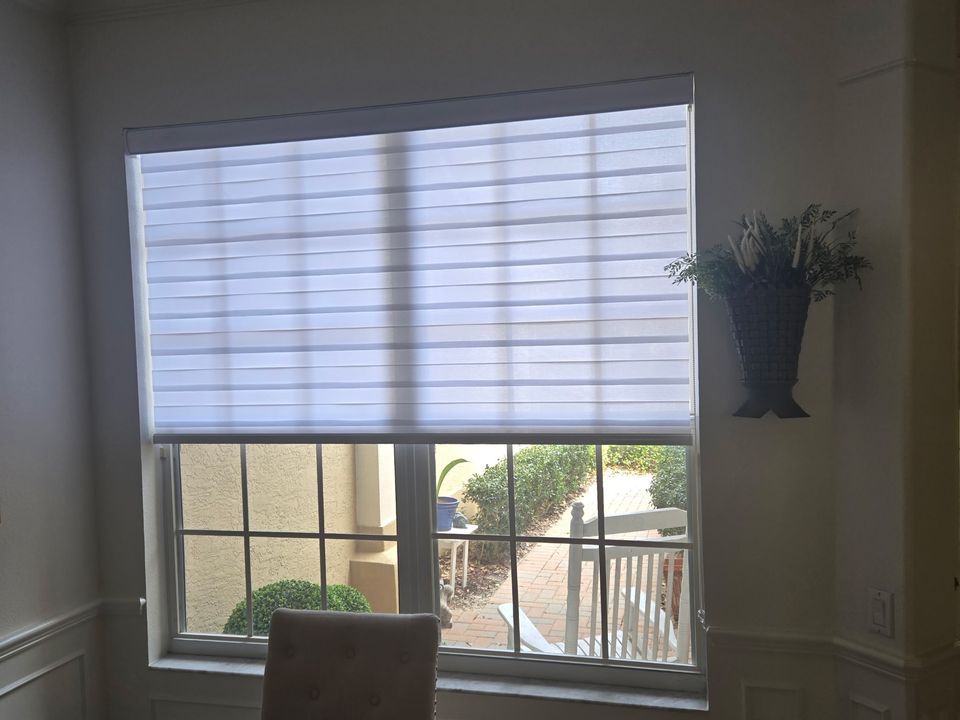
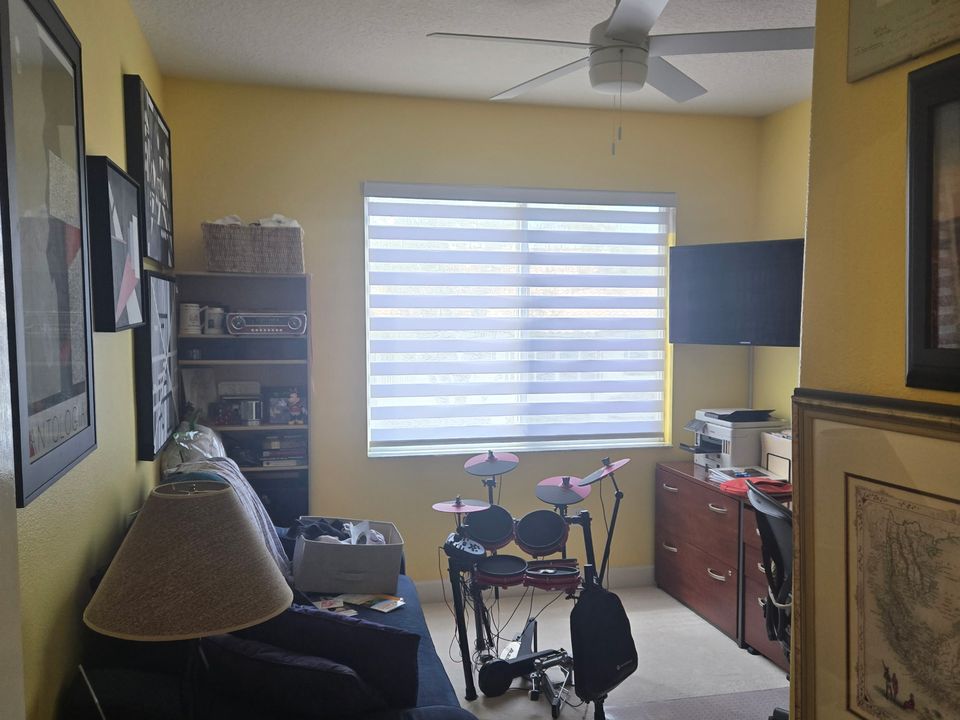
A dual shade is built from a single loop of fabric printed in alternating horizontal bands, half sheer and half opaque. Rolling the shade moves the back layer relative to the front. Line the solid bands up with each other and you get privacy. Offset them and the sheer bands align, and you can see out.
The practical result is that one shade does the job people usually need two treatments for. That is why they have become so common in newer Central Florida homes, where a sheer plus a blind on every window gets expensive quickly.
- Sheer position keeps the view and cuts glare
- Closed position gives near-full privacy without going fully dark
- A blackout backing is available where you need the room properly dark
- Cassette headrail hides the roll for a clean line

Where they work best
Good Rooms, and Rooms to Think Twice About
Dual shades are at their best in living rooms, kitchens, home offices and anywhere you want daylight for most of the day and privacy at night. The sheer position is genuinely useful rather than a compromise.
They are a weaker choice for bedrooms where you need real darkness, because even the closed position lets some light through the seams unless you specify a blackout backing. If a bedroom is the priority, a blackout roller or a cellular shade will do a better job for less money.
Specifying them
Choosing Your Dual Shades
The differences that matter once you get past color.

Band width
Wider bands read as more contemporary and let more light through in the sheer position. Narrower bands look softer and give finer control.

Sheer openness
Ranges from a light haze to almost clear. The more open the sheer, the better the view and the less glare control you get.

Blackout backing
A separate opaque layer behind the banded fabric, for bedrooms and media rooms where the standard version is not dark enough.

Cassette or exposed roll
A cassette conceals the roller and gives a finished edge. An exposed roll is cheaper and works fine inside a deep reveal.

Cordless or motorized
Both remove the chain. Motorization is worth it on anything tall or wide, or where several shades should move together.

Width limits
Very wide openings are better split into two shades. A single band that wide will not hold a straight line over time.
Common questions
FAQs: Dual and Zebra Shades
Still deciding? Call (407) 295-5200 or book a free in-home consultation and see samples in your own light.
They are the same product. Dual shade, zebra shade, banded shade and transitional shade are all names for a roller shade built from alternating sheer and opaque bands that slide past each other.
In the closed position they give near-full privacy, which is enough for most living spaces. Some light and silhouette can pass at the seams, so for bedrooms we recommend specifying a blackout backing or choosing a blackout roller instead.
Yes, particularly in living areas. The sheer position cuts glare while keeping the view, and the closed position blocks a substantial amount of direct sun. For heat specifically, a cellular shade or a solar fabric will outperform them.
Yes. Motorization suits them well because the useful part of a dual shade is fine adjustment between the sheer and closed positions, which is easier with a motor than by hand.
Dust them with a soft brush attachment or a feather duster with the shade fully lowered. Spot clean marks with a barely damp cloth. Do not soak the fabric, as the banded material can distort if it gets properly wet.
From our portfolio
Dual Shades Gallery
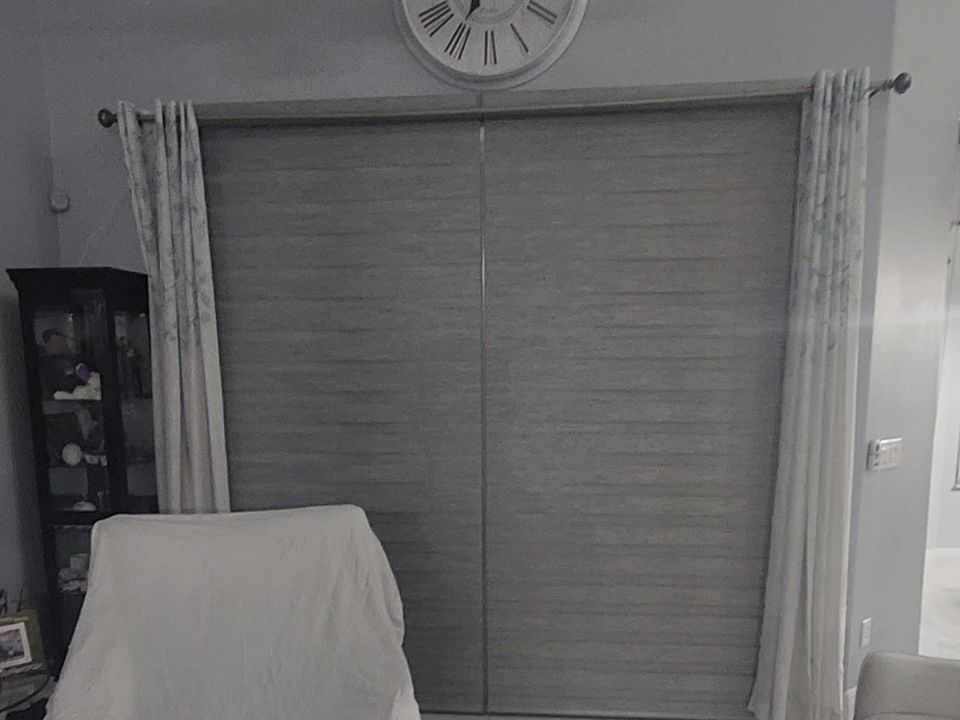
5 photographs from VU's portfolio. Select any photo to see it larger.
Keep exploring
You Might Also Be Looking At

Roller Shades
Pick an openness factor and decide exactly how much sun gets through.
View
Motorized Shades
One tap, or on a schedule that beats the sun to the glass.
View
Cellular Shades
Honeycomb cells that trap air and cut heat transfer.
View
Roman Shades
Soft folds for rooms where a hard treatment feels too severe.
View
No cost, no pressure
Book Your Free In-Home Consultation
A design consultant brings the full sample library to your home, measures what you want quoted, and leaves you with firm pricing. Serving Greater Orlando and the Space Coast from our shop in Ocoee.